 In 66 C.E. the Jewish people, living under the rule of the Romans, rose up in rebellion against the empire. In 70 C.E. Rome responded violently to put down the uprising.
The Temple was destroyed, and a few months later, houses of the wealthy in the upper city were burned and ravaged and men, women and children were killed.
In the years following the six-day war in 1967, Israeli archeologist began excavating areas hidden for almost 2,000 years. As they made plans for the construction of today’s Jewish Quarter, they uncovered the remains of wealthy homes devastated by the first century fire. One, called appropriately the Burnt House, is open for viewing.
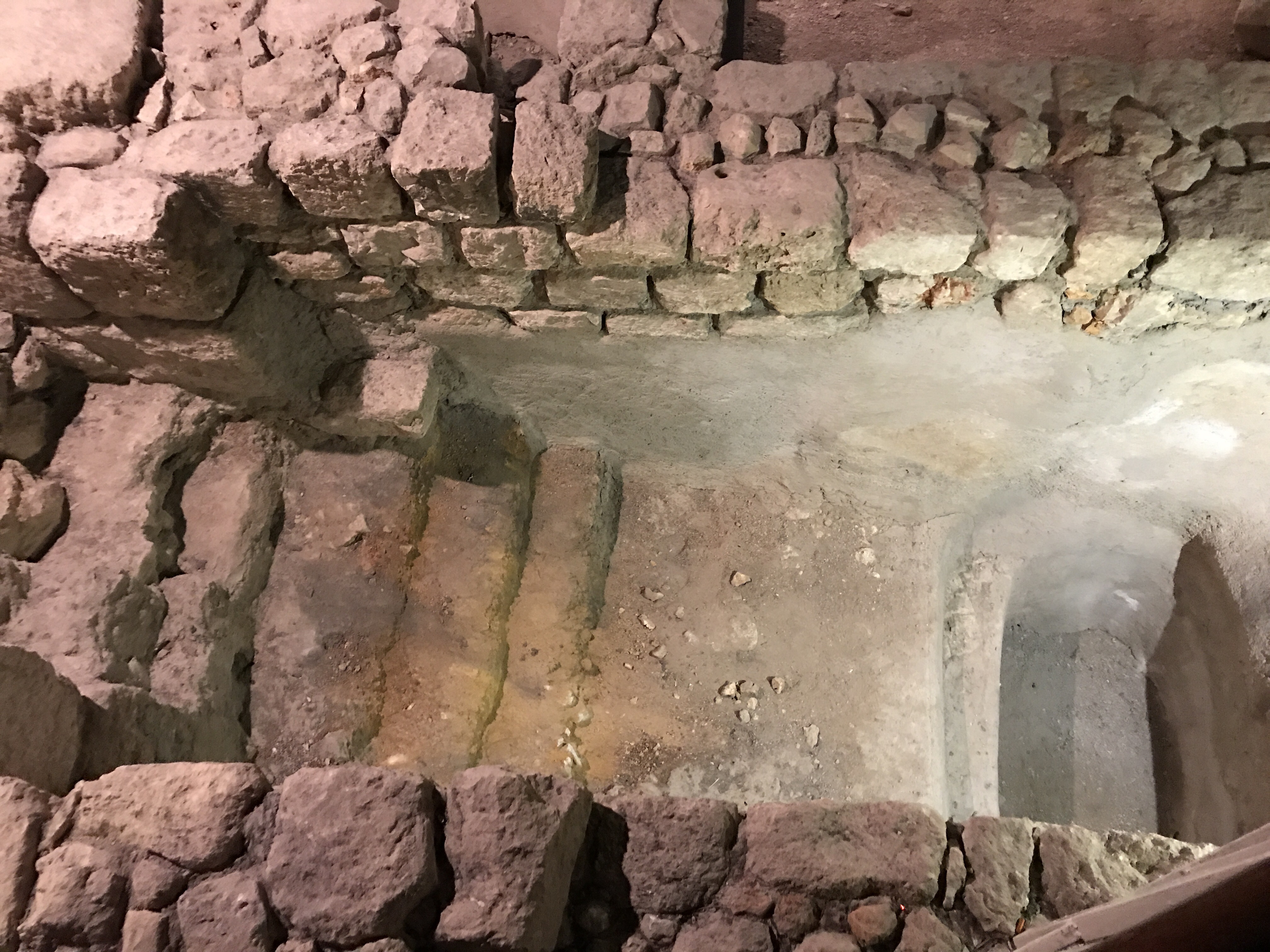
In addition to the remains of some mosaic floors and colorful wall frescoes with obvious burn marks, you can see one of the home’s ritual baths, called a miqveh (pictured above).
Surviving the destruction of the Jewish Temple, people, and identity, this bath bears stark witness to the Jew’s forced removal from their homeland for almost 1,900 years.
 Clemans Travelogue