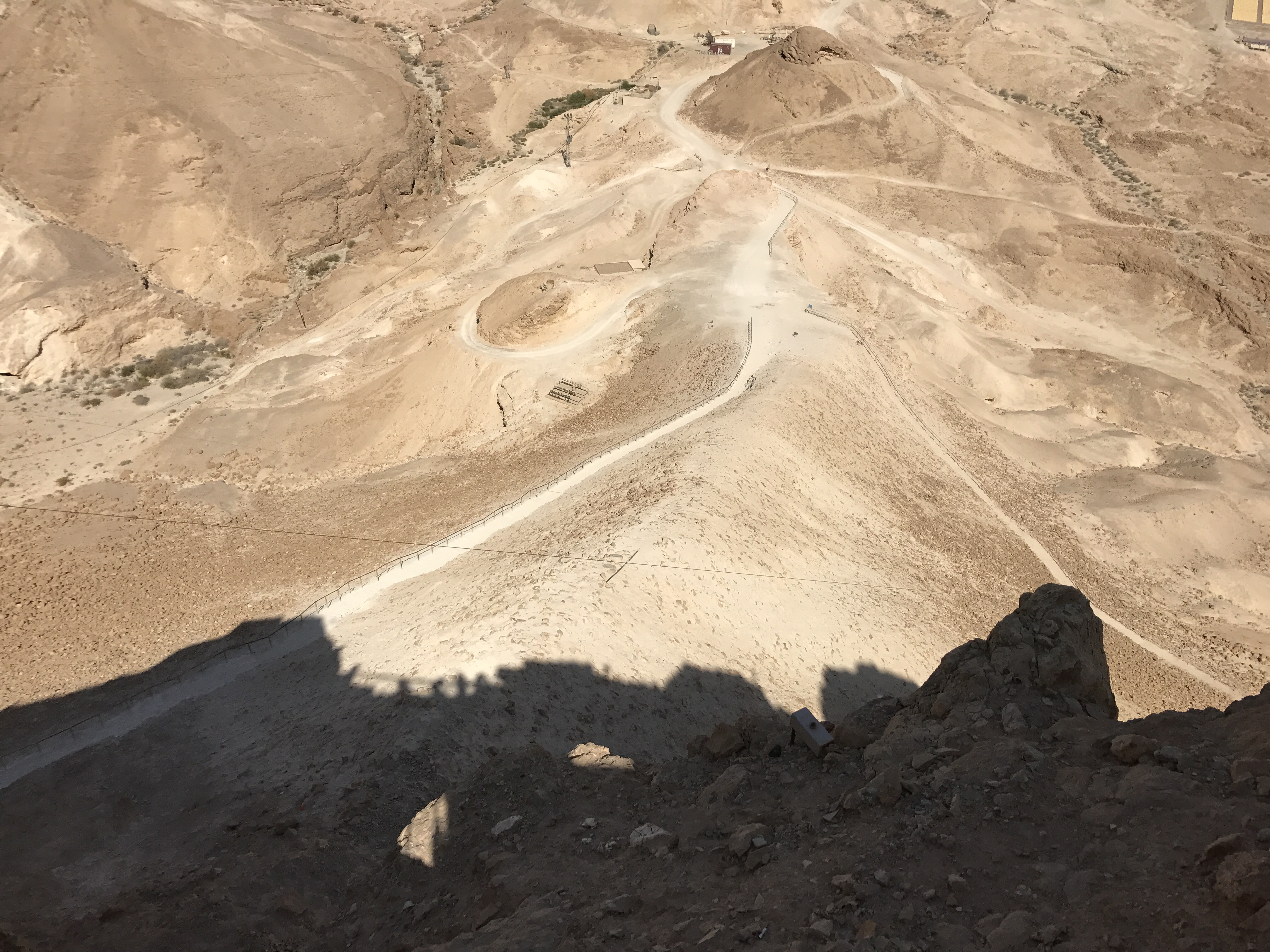
 Looking down from the high bluff above the Dead Sea, you can see the remains of the siege ramp the the Roman legion used to breach the heavily fortified refuge for the Jewish resistance.
The year was 73 C.E. The place was Masada (meaning fortress), on the southwest edge of the Dead Sea, one of Herod the Great’s palaces built at the beginning of the first century. Herod was so unpopular that he had multiple places of refuge scattered across the country. After Herod’s death, this particular fortress was occupied by the Jewish resistance.
Following the destruction of the Temple in 70 C.E., resistance fighters barricaded themselves at Masada. After a three-month siege, the Romans were able to break through the fortifications expecting to capture the residents. What they found was the bodies of almost 1,000 men, women and children who had made the choice to die at their own hands rather than be taken captive.
Masada is a modern metaphor for the yearning of the Jewish people, to use American vocabulary, to live free or die.
 Clemans Travelogue