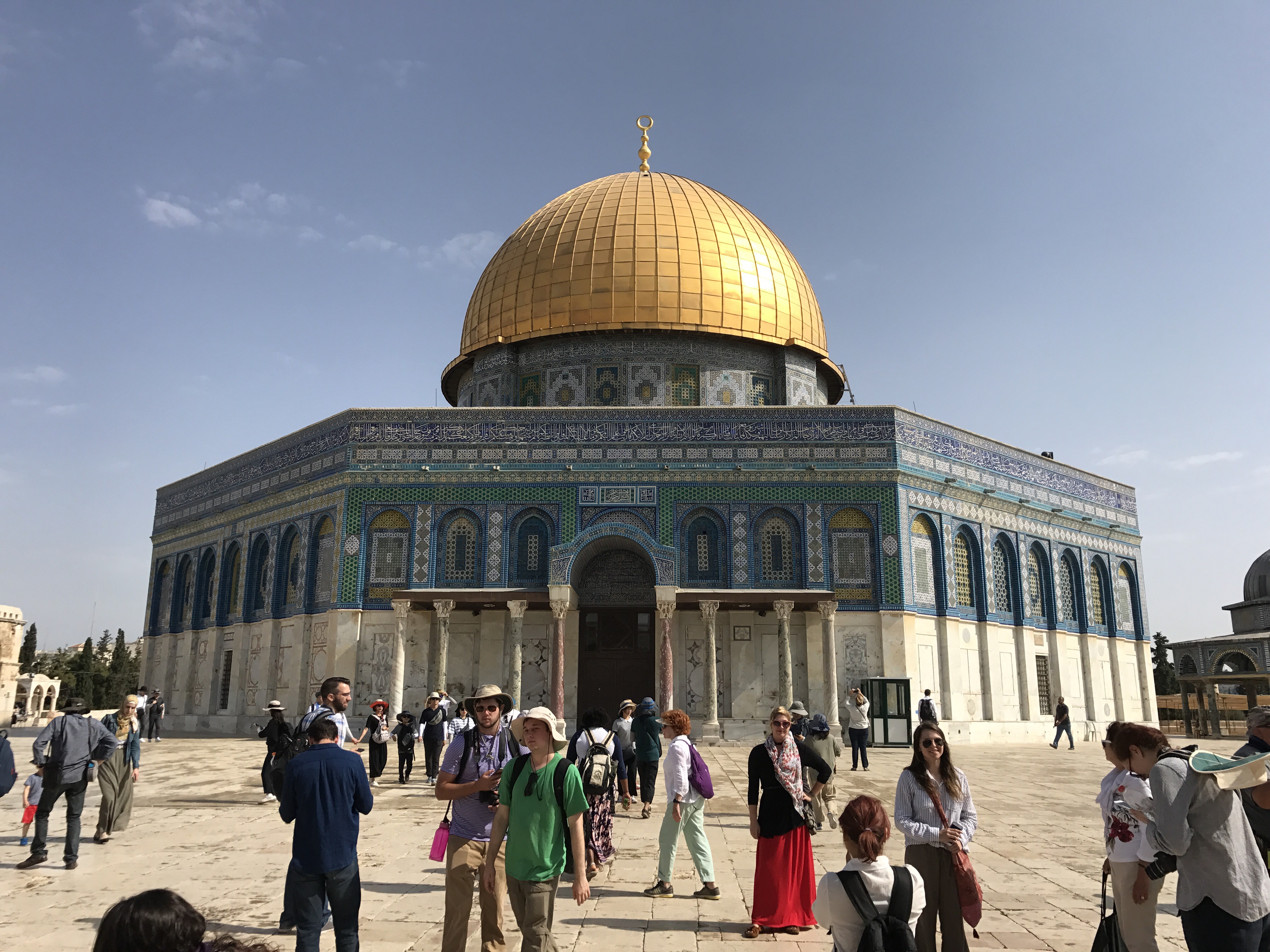
The Dome of the Rock


The Dome of the Rock is the third most holy site in the Muslim tradition, next to Mecca and Medina. It is not a mosque, but a shrine, built in 691 CE on the site of the Second Jewish Temple which was built by Herod the Great and destroyed in 70 CE.

It is basically a canopy covering an extrusion of bedrock believed to be the place where God stopped Abraham from sacrificing Isaac and where, centuries later, the Prophet Muhammad began his “Night Journey” to heaven.

Today the site is a Muslim holy place and many people visit.  However, by decree of religious leaders, Jews are not allowed to visit. 

This site is the most contested religious site in the world and had been the flash point for many recent conflicts.  As peaceful as it was when we visited, a brief conversation with one of the security guards reminded us of the intractable differences that still exist between religious traditions.
Western Wall (Kotel)


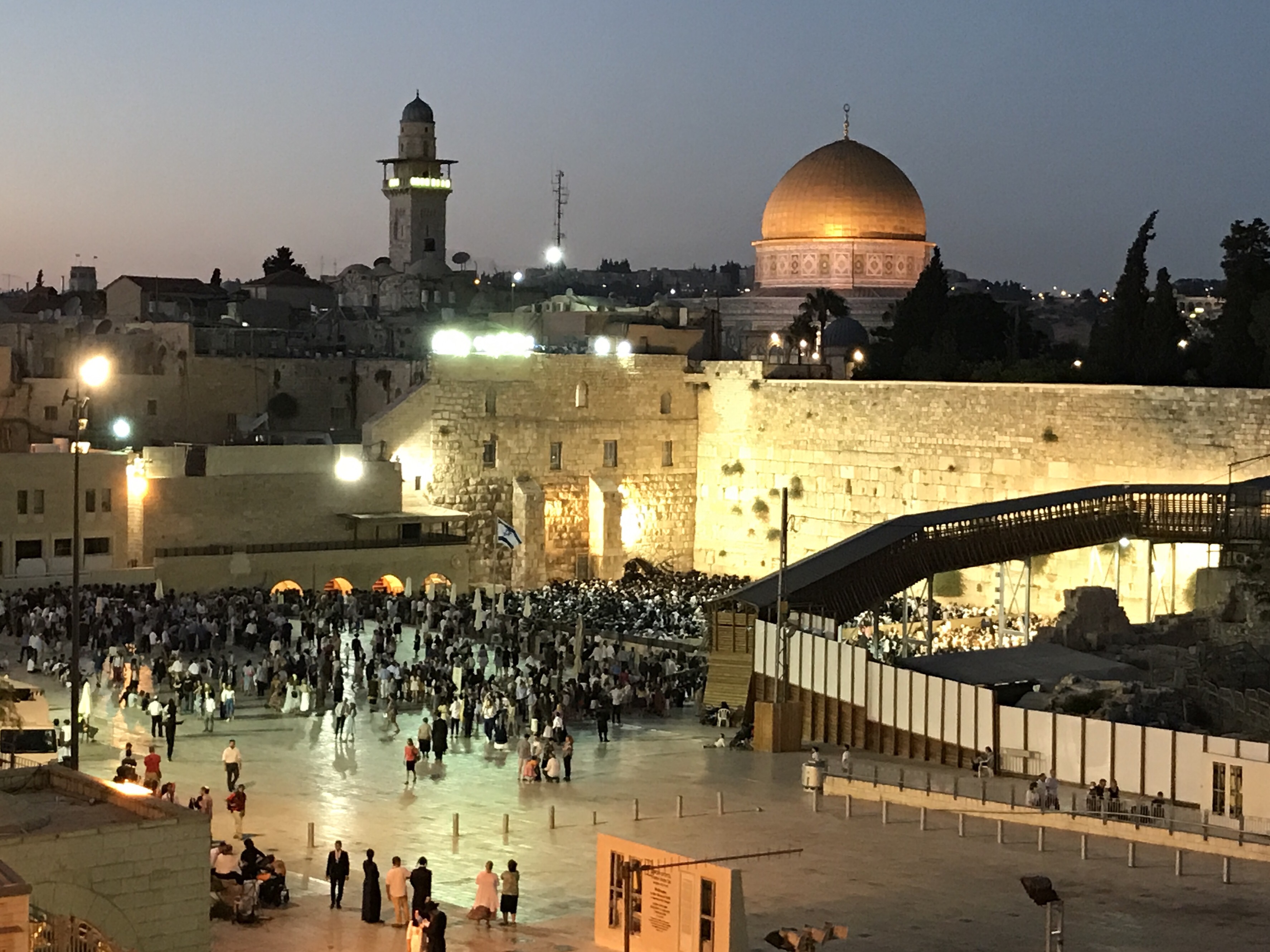
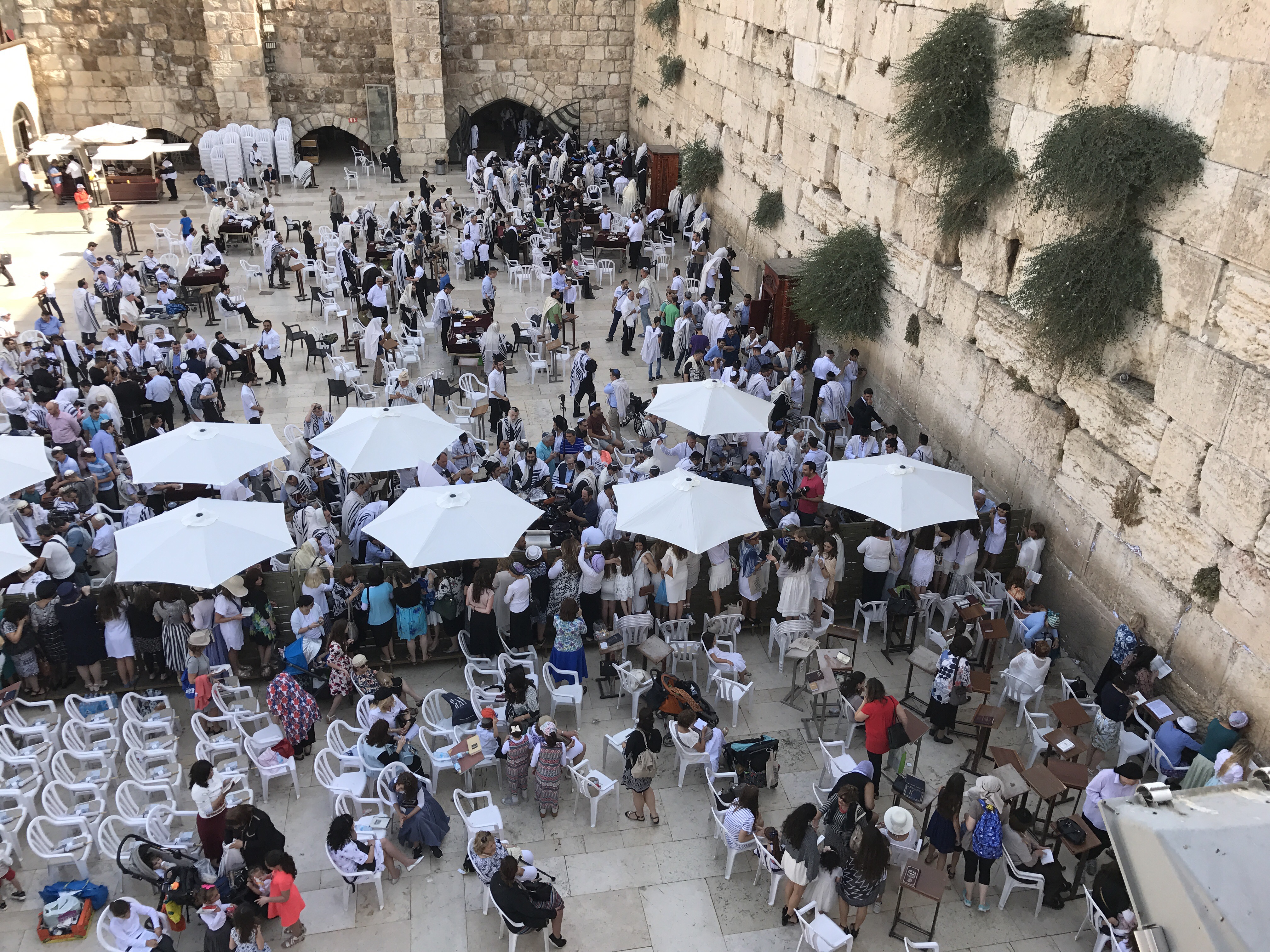
The entrance to the Temple Mount is adjacent to the Western Wall. On the way up there is a great view of the Western Wall plaza where Jews gather to offer prayers.  The top two-thirds you’ll see men gathering. Women are in the bottom section of the picture. There is a strict separation of genders.

Earlier this summer there was a movement to allow both genders to pray at the wall together. However, the political and  cultural climate is preventing that change from happening.  

Further down the wall, out of sight of the main plaza is a place where men, women and families can and do pray together, representing the hope that traditions can change. 

It is always hard, in any tradition, to know how long to hold on to what has been and when to make room for new practices.

Arrow slits


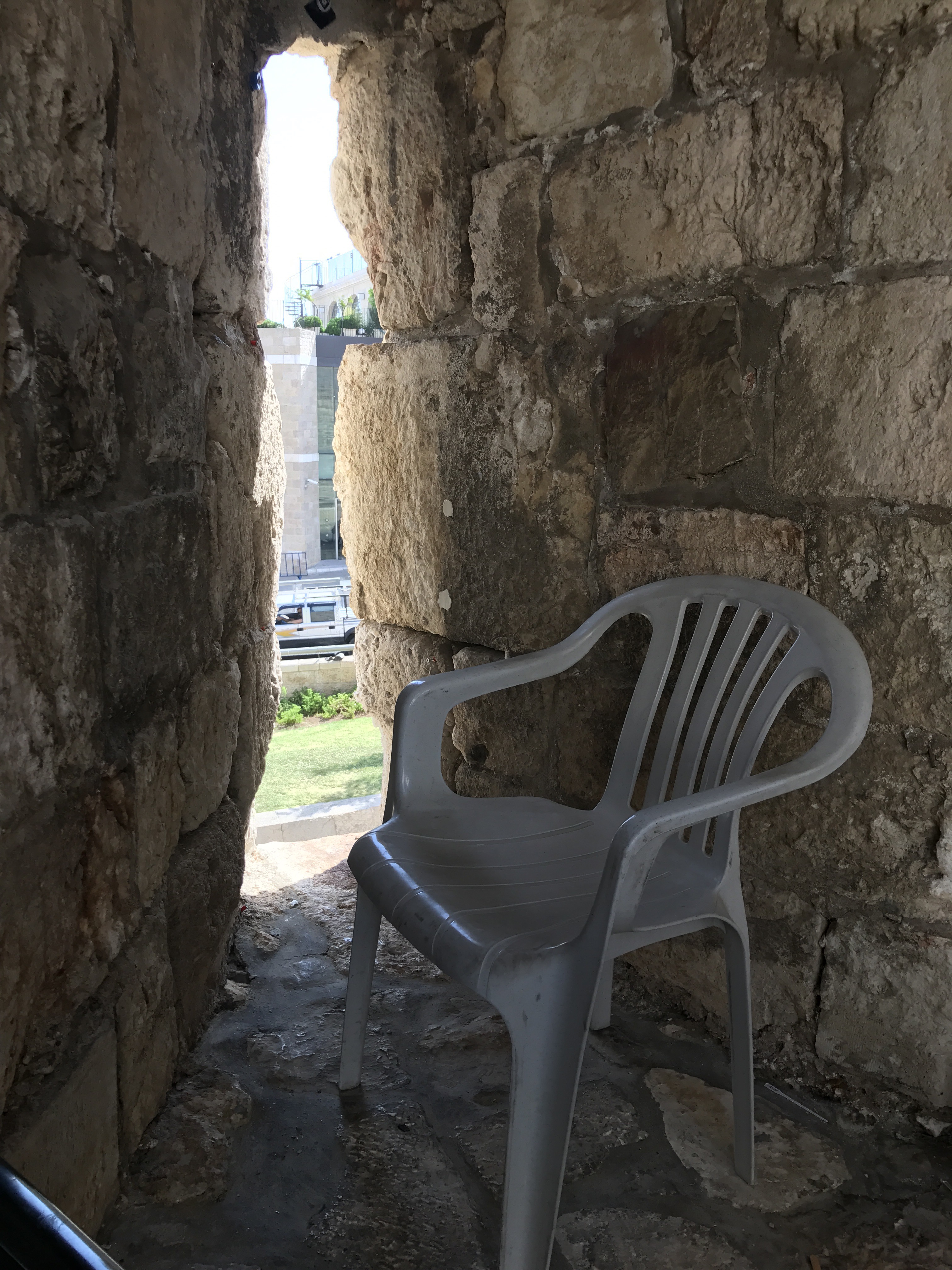
One side of the courtyard of our hotel is a part of the medieval walls that protected Jerusalem.  We can sit in a little nook and look out over the streets and shops.
The slit in the wall is called an arrow loop or slit, a thin opening with a bevel inside providing enough room for someone to shoot a weapon out the slit. Archers would be able to shoot at invading armies.

Today it protects us from the sun gives a narrow view of life outside the walls. 

A healing pool


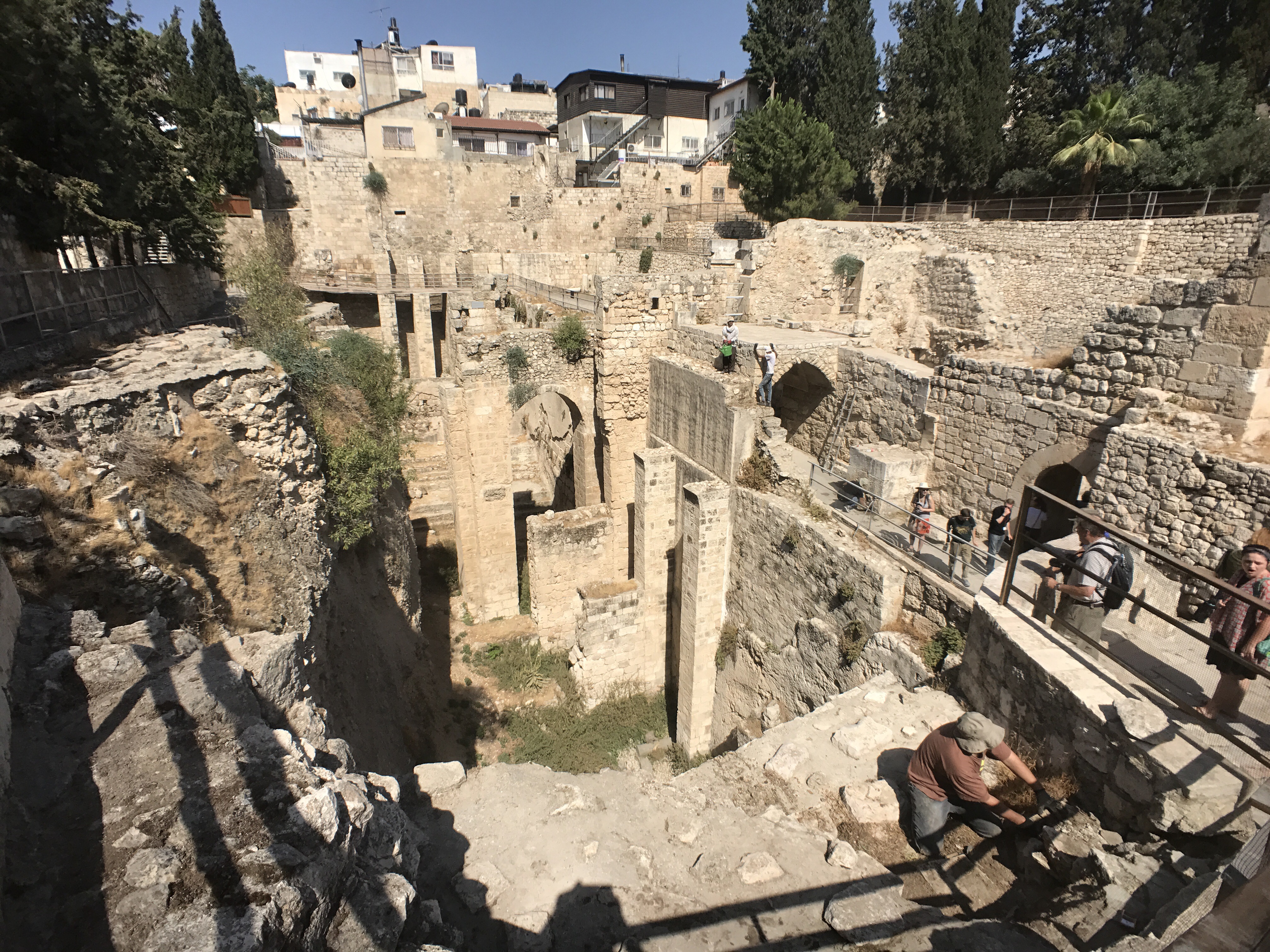
In the Gospel of John, chapter 5, the story is told of this place: the pool of Bethesda.

(NRSV) John 5:2 Now in Jerusalem by the Sheep Gate there is a pool, called in Hebrew Beth-zatha, which has five porticoes. 3 In these lay many invalids—blind, lame, and paralyzed. 5 One man was there who had been ill for thirty-eight years. 6 When Jesus saw him lying there and knew that he had been there a long time, he said to him, “Do you want to be made well?” 7 The sick man answered him, “Sir, I have no one to put me into the pool when the water is stirred up; and while I am making my way, someone else steps down ahead of me.” 8 Jesus said to him, “Stand up, take your mat and walk.” 9 At once the man was made well, and he took up his mat and began to walk.

Though today water is no longer flowing into this pool and we still have difficulty answering Jesus’ direct question, lives are still being transformed and people are learning to walk again by the power of Jesus’ words and power.

Quick catch up

Temperature and humidity at the Dead Sea yesterday afternoon. (Today in Jerusalem it only hit 100!)

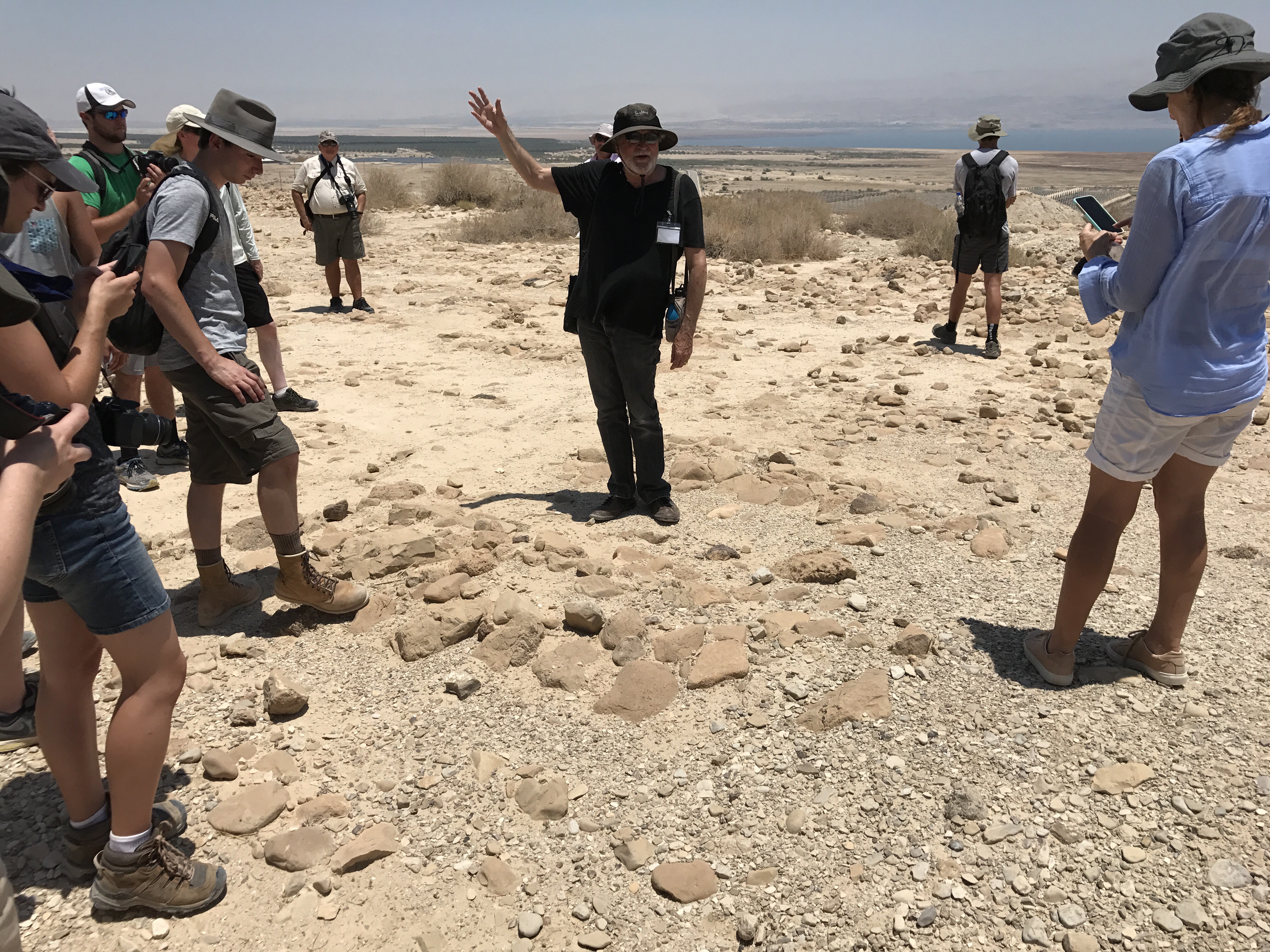
In spite of the heat, at Qumran, Professor James Tabor explains the burial practices of the Essenes.

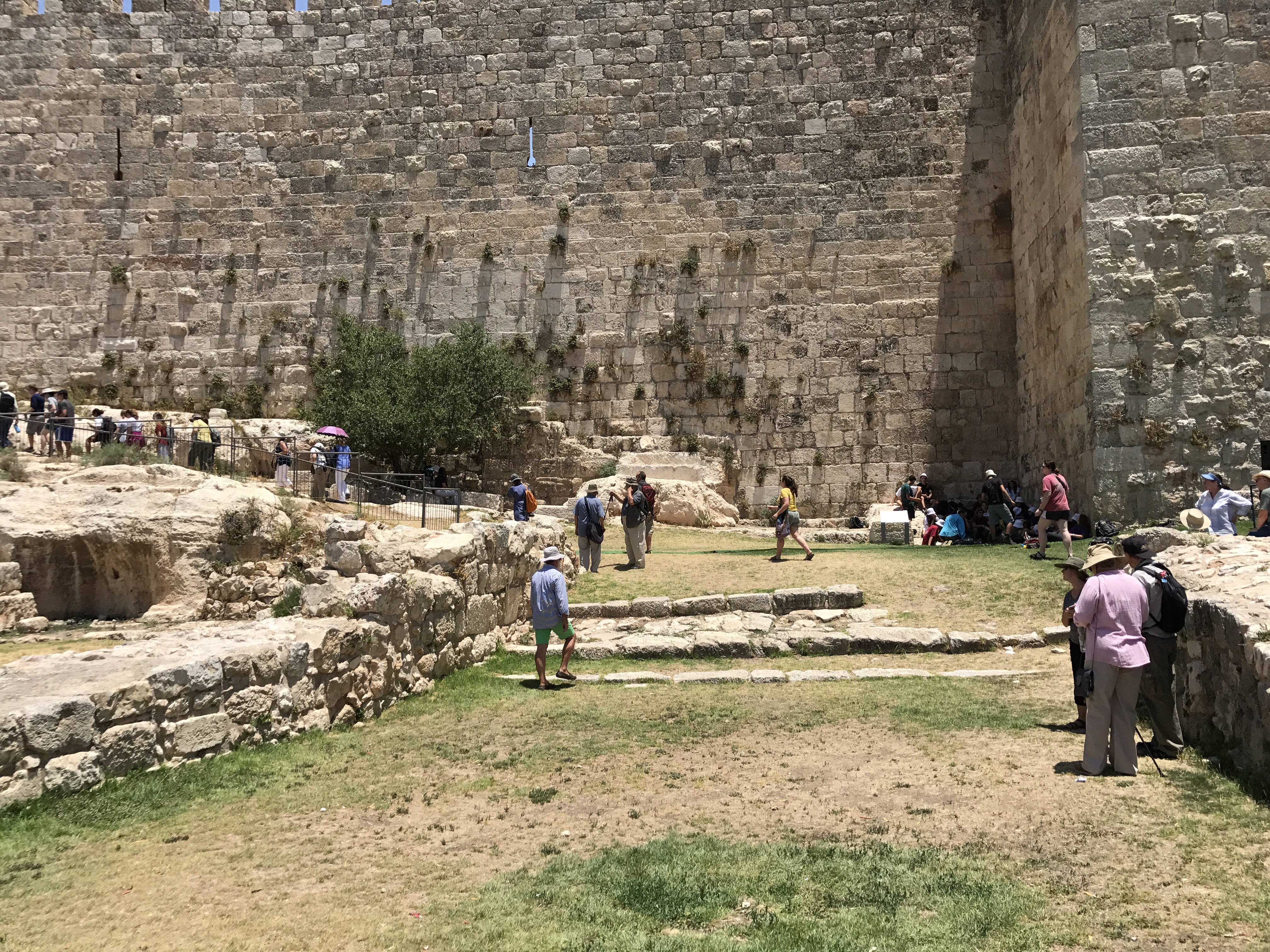
Outside the current city walls of Jerusalem, today we visited the site of Herod’s Palace judgement seat, the likely location of the trial of Jesus before Pontius Pilate.

Masada

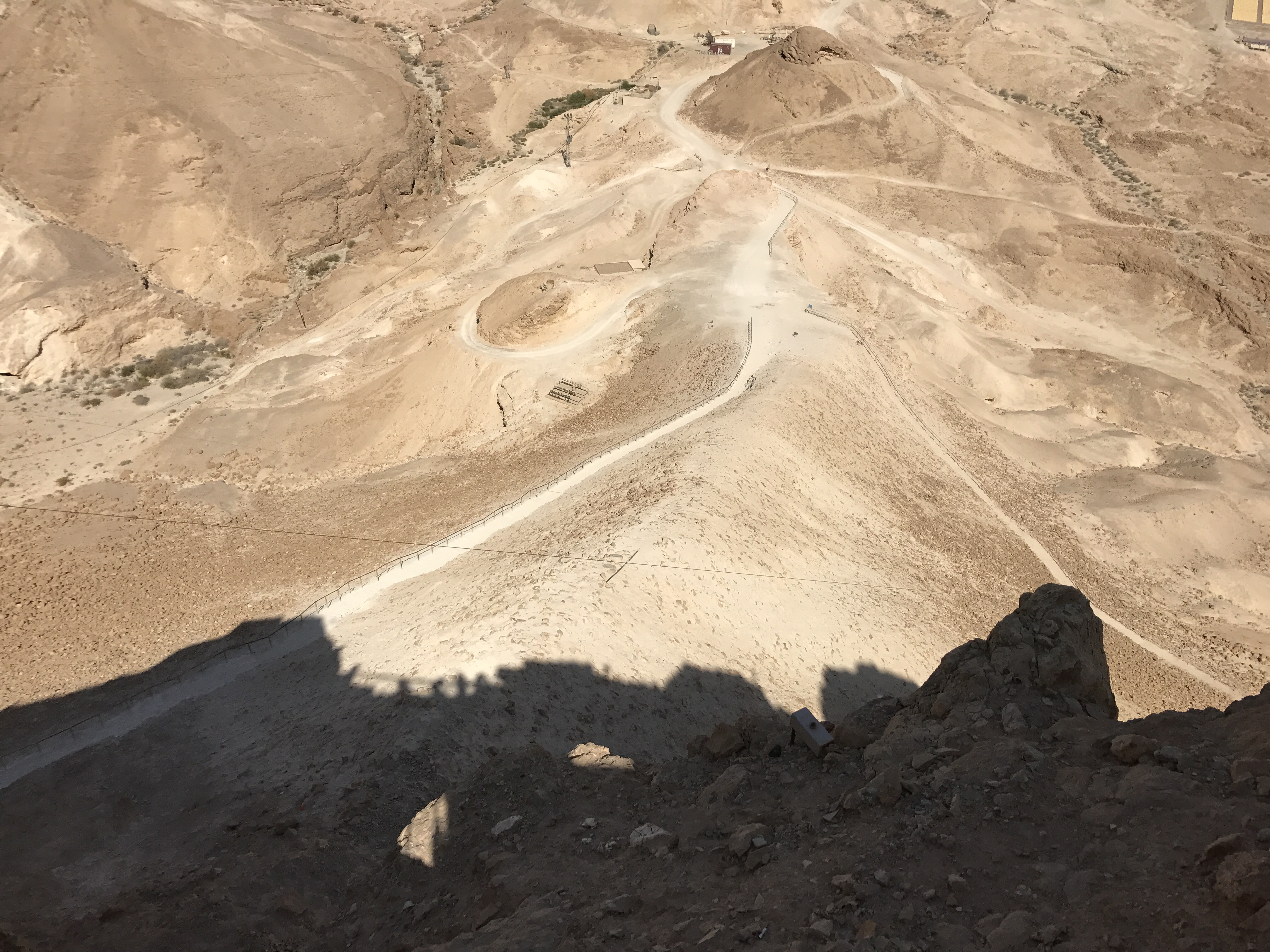
Looking down from the high bluff above the Dead Sea, you can see the remains of the siege ramp the the Roman legion used to breach the heavily fortified refuge for the Jewish resistance. 

The year was 73 C.E. The place was Masada (meaning fortress), on the southwest edge of the Dead Sea, one of Herod the Great’s palaces built at the beginning of the first century. Herod was so unpopular that he had multiple places of refuge scattered across the country. After Herod’s death, this particular fortress was occupied by the Jewish resistance.

Following the destruction of the Temple in 70 C.E., resistance fighters barricaded themselves at Masada. After a three-month siege, the Romans were able to break through the fortifications expecting to capture the residents. What they found was the bodies of almost 1,000 men, women and children who had made the choice to die at their own hands rather than be taken captive.

Masada is a modern metaphor for the yearning of the Jewish people, to use American vocabulary, to live free or die.

Catching up


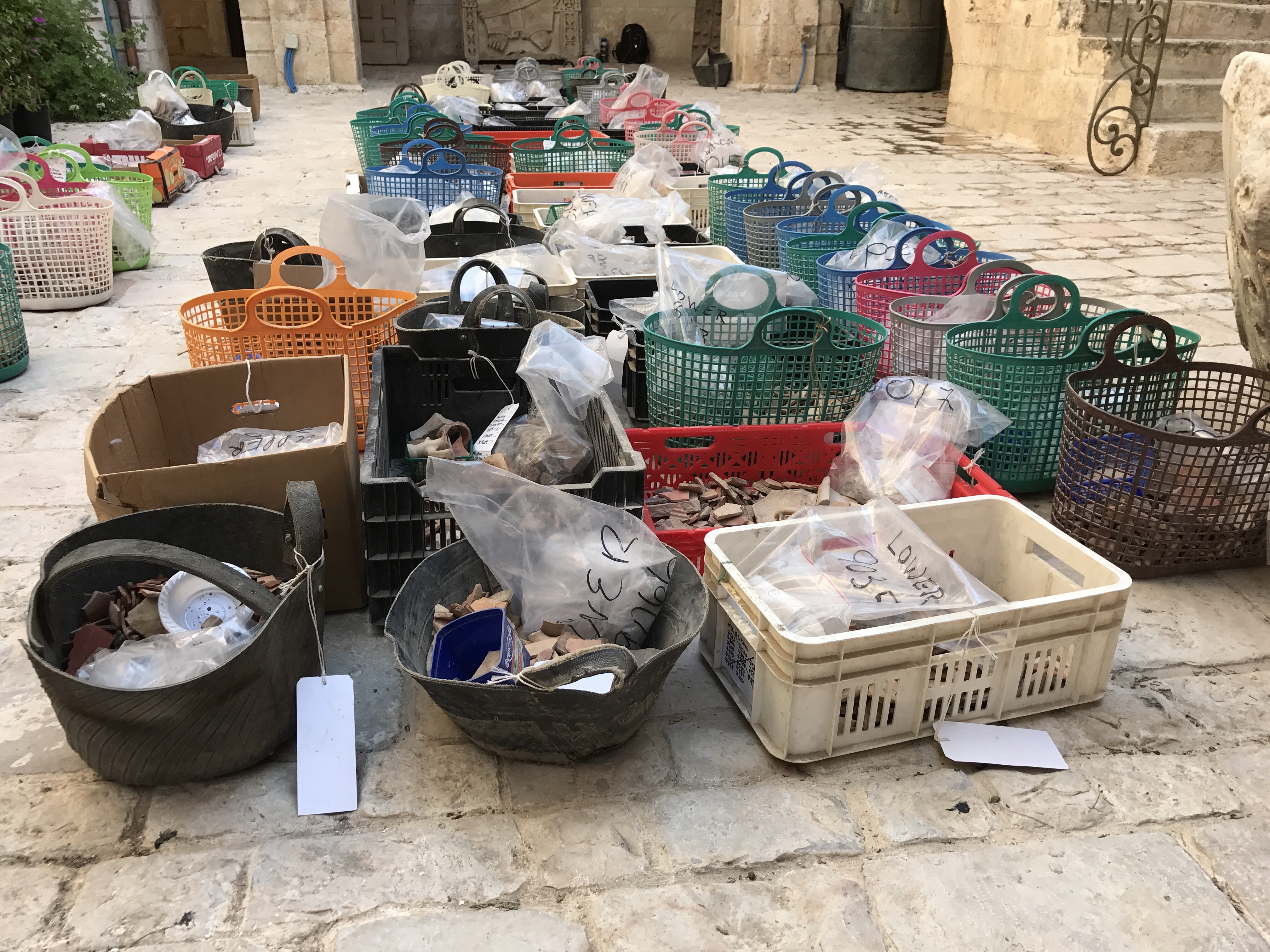
It was supposed to be a day off. But the call went out for volunteers to help clear the backlog of pottery washing.

Apparently, we were so productive in the amount of material taken out of the dig that almost 100 buckets of pottery shards were still waiting to be processed at the end of last week.

So we showed up at 8am this morning and didn’t get finished until 3pm. We poured bucket after bucket of shards into the water and gently washed each one, looking for anything out of the ordinary. Through the day there were a couple of pleasant surprises.

Sometimes, what makes possible a greater good is hour after hour of mundane, even tedious, work. There’s not much glory in some tasks, but they need to be done nevertheless.

Tomorrow we head to Masada and Qumran (Dead Sea Scrolls).  

Shabbat Begins

The Jewish Shabbat (Sabbath) begins a few minutes before sunset on Friday evening. Tonight, sunset was 7:48 p.m. A group of us wanted to experience the beginning of Shabbat in person. So we had a quick dinner and headed out for the place to be, the Kotel (Western/Wailing Wall).

The Western Wall is the holiest site in Judaism. It is the last remaining part of the foundation walls upon which the Jerusalem Temple of the first century was built.

We joined throngs of people streaming toward the Kotel–families, packs of young people, older men and women moving slowly, grandchildren urging the along. There was excitement in the air, including some singing. The whole community was gathering for something special. 

Everyone went through an airport-like security screening to get admittance to the plaza. 

The closer we got to the Wall the more females spilt off from males–the prayer areas are separate. Singing and dancing came from both the men’s and women’s side. The area in front of the wall filled to overflowing. We were immersed in the joy of Sabbath celebration.

I think the closest experience we have in our protestant Christian tradition is the increase in worshippers at Christmas and Easter. Can you imagine an experience like this every week?

All That’s Left

In 66 C.E. the Jewish people, living under the rule of the Romans, rose up in rebellion against the empire. In 70 C.E. Rome responded violently to put down the uprising.

The Temple was destroyed, and a few months later, houses of the wealthy in the upper city were burned and ravaged and men, women and children were killed.

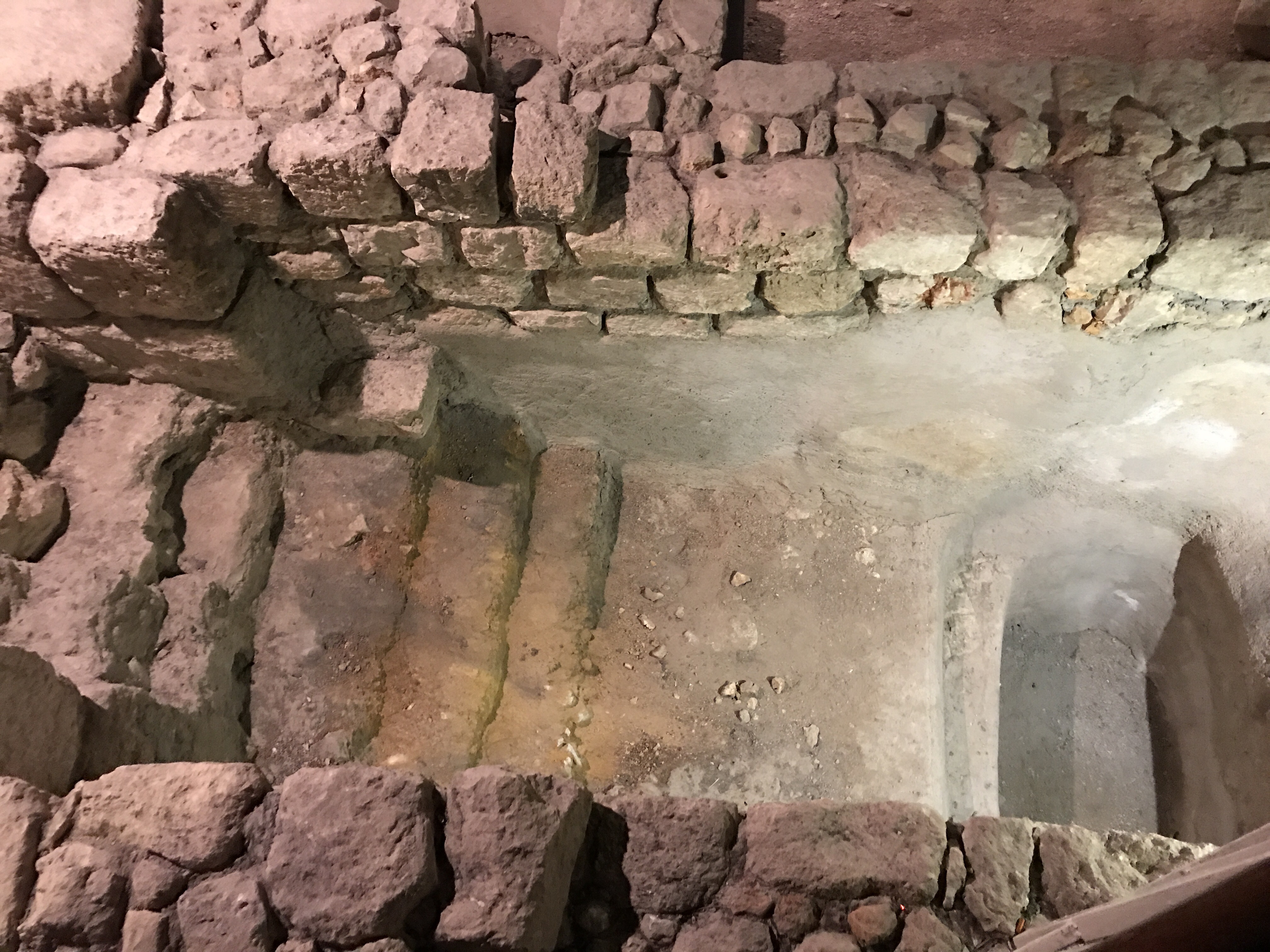
In the years following the six-day war in 1967, Israeli archeologist began excavating areas hidden for almost 2,000 years.  As they made plans for the construction of today’s Jewish Quarter, they uncovered the remains of wealthy homes devastated by the first century fire. One, called appropriately the Burnt House, is open for viewing.

In addition to the remains of some mosaic floors and colorful wall frescoes with obvious burn marks, you can see one of the home’s ritual baths, called a miqveh (pictured above). 

Surviving the destruction of the Jewish Temple, people, and identity, this bath bears stark witness to the Jew’s forced removal from their homeland for almost 1,900 years. 

Week Two Comes to an End


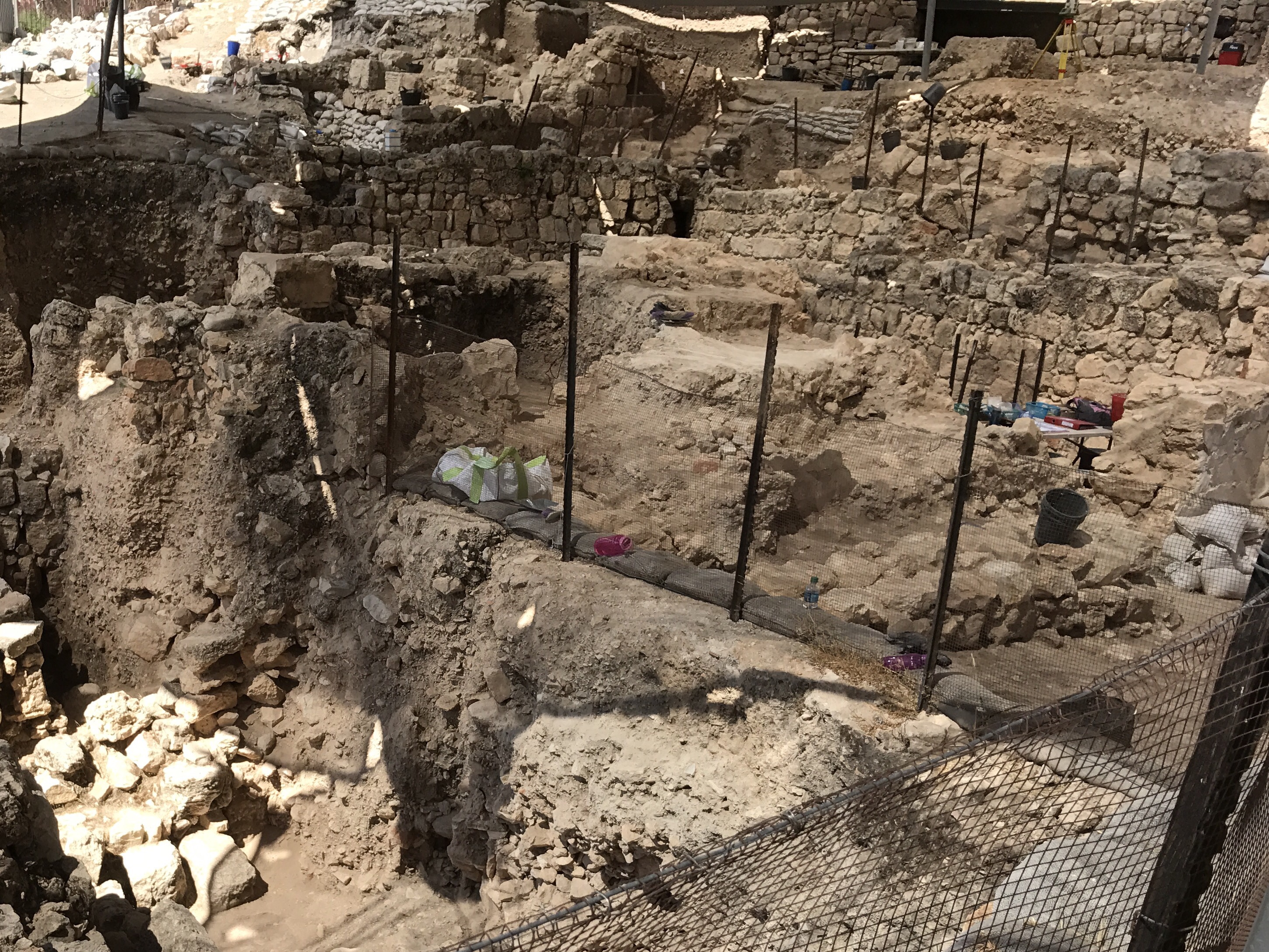
We have completed the first two weeks of the 2017 dig.

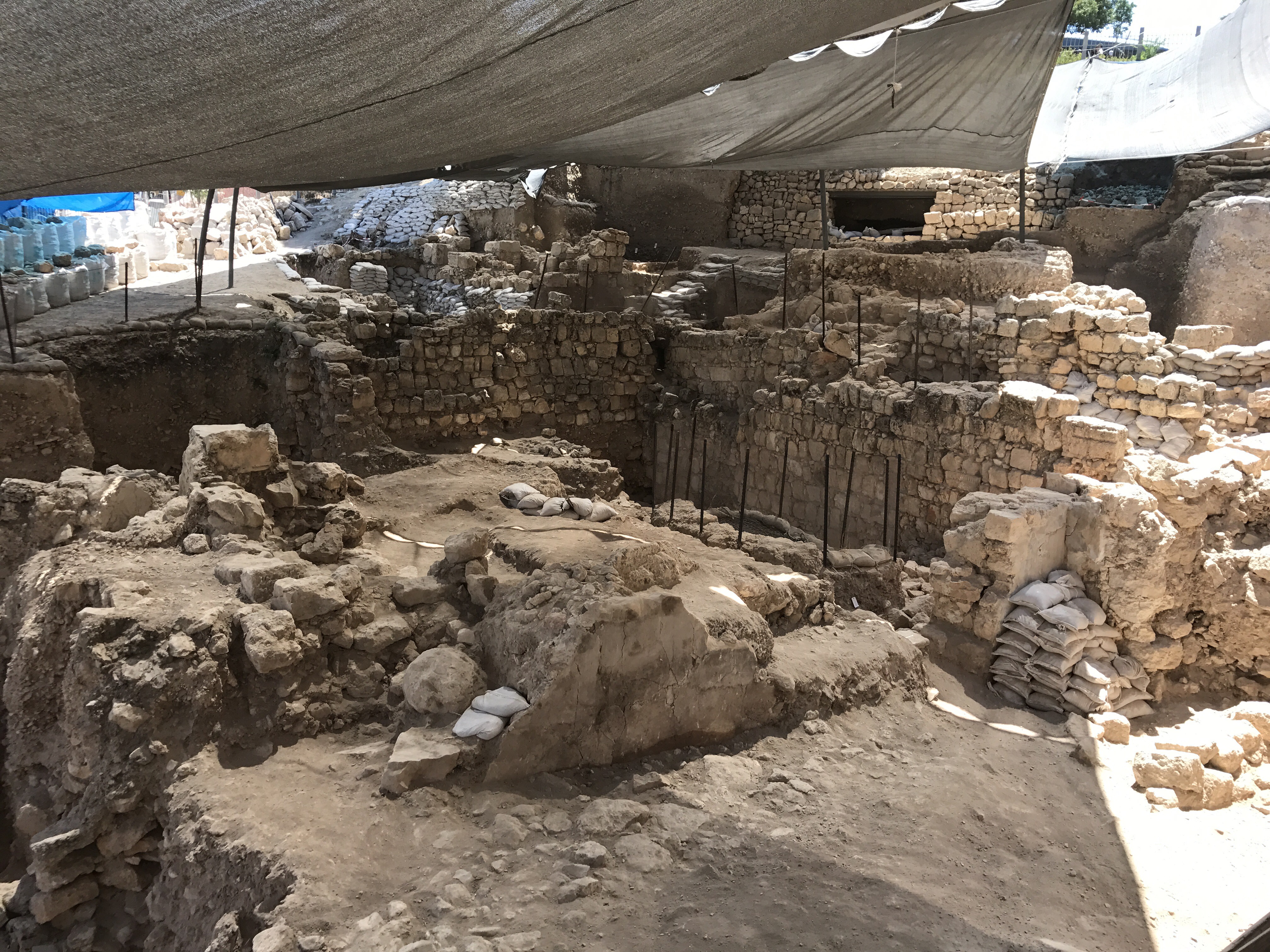
The two photos above show the before and after views of the sight.  You’ll have to get out your best “where’s waldo?” glasses to compare the two, but notice the streamlined contours of the site now.  

We have moved a lot of dirt! We have filed over 150 large bags, each holding about a half-ton of dirt and rocks – a lot of material to discard. Each one costs about $15 to dispose of — one of the biggest expenses of the dig. 

As each layer is taken down it is easier to see the underling structure and to have a better idea of the best plan forward. 

The next week is an interim week for field trips to sites around Israel, some common, must-see, and some unique sites.  The weeks after that hold great promise for some exciting archeology.  More in the days to come…