Good food, dirty conditions


(I know I missed posting yesterday, so two today) 

The food here is typical middle eastern fare. Hummus, falafel, salads, lots of chicken, and wonderful spices.

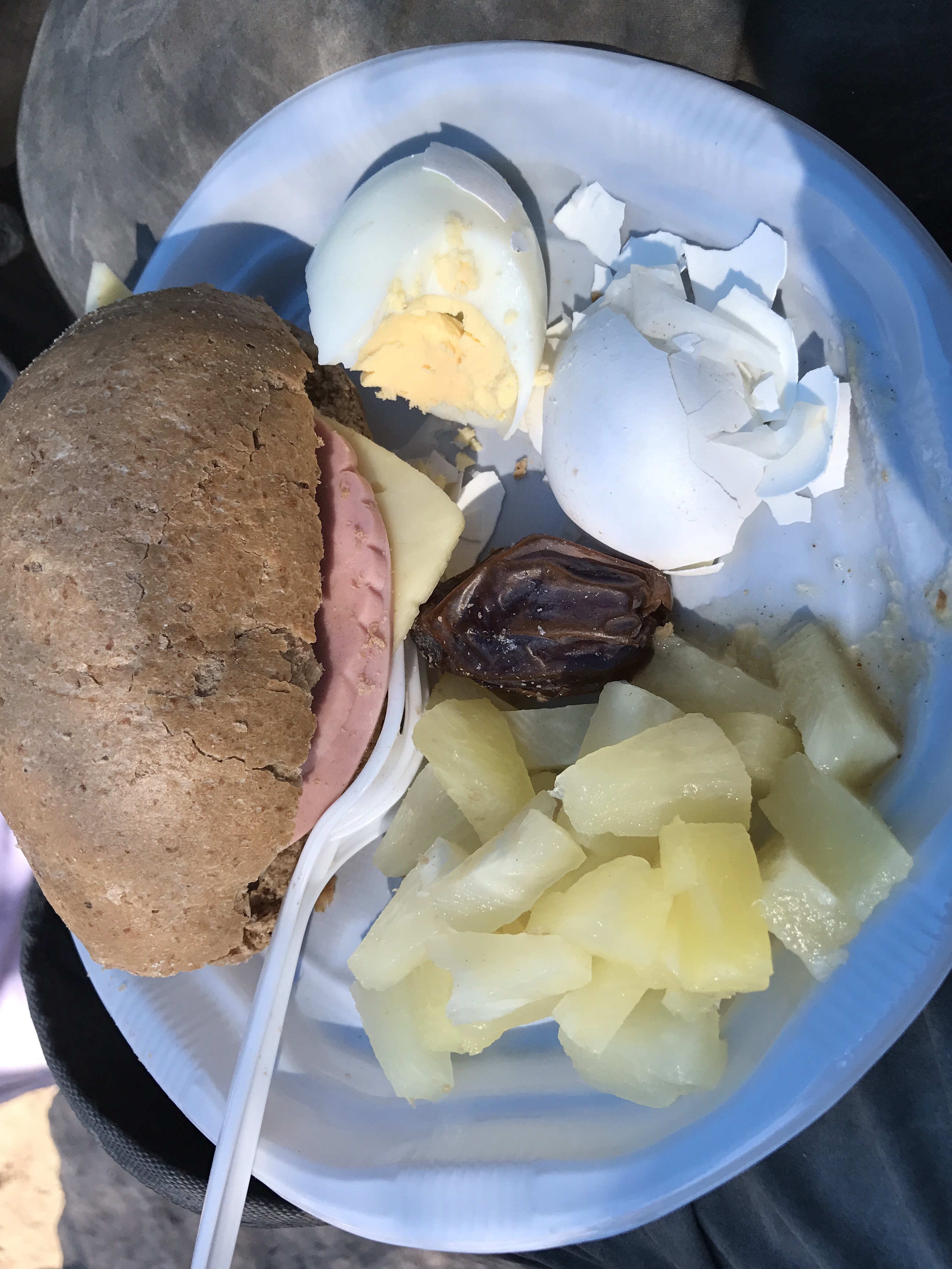
Since we leave for the site so early, breakfast is brought in around 9am. A buffet is set up on tables and rock ledges with a similar spread each day. The first couple of days we were fastidious in trying to clean up before eating. By Day 3-4 most everyone gave up and just dug in. It’s not appetizing to peal an egg with dusty fingers, but hunger triumphs.

You can see my typical breakfast above: a sandwich roll with (some kind of) bologna, cheese, and Apple jam with cinnamon. Fresh pineapple chunks, dates, and a hard-boiled egg rounds out the meal. Yum! (I passed on the hummus and Geek salads and tabouli.) By mid-morning, just about anything would taste great.

Around 11am we are treated to a variety of flavors of frozen popsicles.

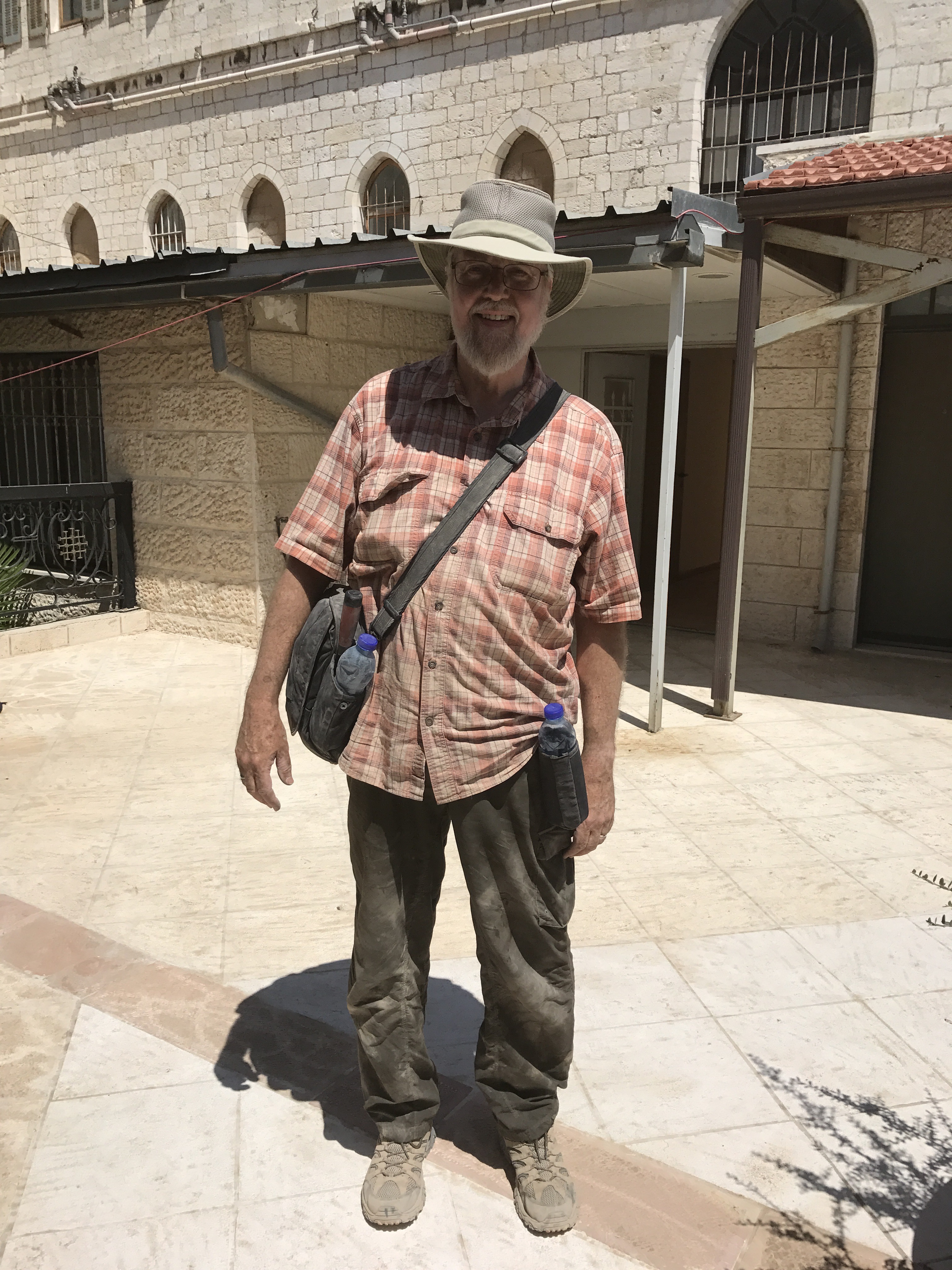
The second photo shows my dirt-covered self at the end of the day. A fine dirt/dust permeates everything. Some things we can washout in the sink or bathtub. But some things need to be laundered. I pity the folks who launder our clothes!

Good food, dirty conditions. 
Cleaning pottery

Apart from one or two days last week, we have not had scorching days–low to mid-nineties a couple of days, but the hottest days are coming next week. Fortunately we work under a sun shield. But it does get hot!

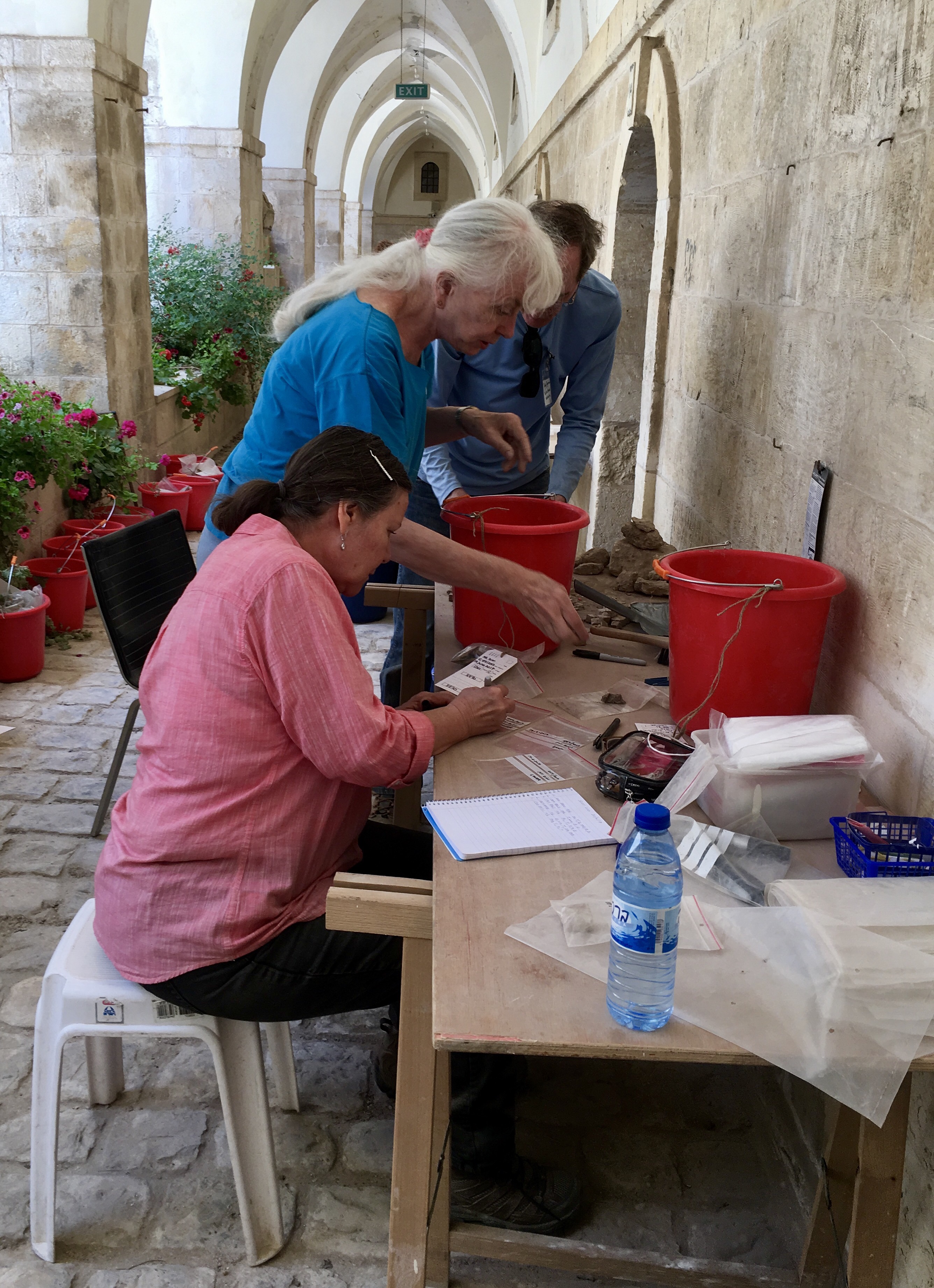
One of the respites from the hot weather is the task of pottery washing. The Armenian Museum nearby has graciously made some of their space available to the dig team to process the finds from each day. It’s sheltered from the sun (mostly) and you work sitting down. Team members are rotated through the assignment over a two week period. 

After the finds are sorted and catalogued, the pottery is taken to a washing station where people gently wash the pottery to remove dust and dirt. Often the value of a shard is not obvious until it is cleaned. 

Washing reveals details, colors, and (best of all) any inscriptions or writing. That can help date the pottery and provide valuable information for mapping the site in both space and time.

Best of all, it’s a cooler spot on an otherwise hot day.

Discoveries we can’t talk about

Photo credit: digmountzion.uncc.edu/discoveries/

When you discover something, you want to share the news, right?

Ordinarily. But in our situation we are not able to share pictures or news of exciting discoveries on the dig. Why? 

The license for the site requires that all announcements of discoveries go through the Israeli Antiquities Authority. And, since this is an academic project, discoveries need to be analyzed and vetted by experts before being made public. This means that special discoveries often take months or years to be made public. So, it may be a while before you read about things found in this 2017 dig.

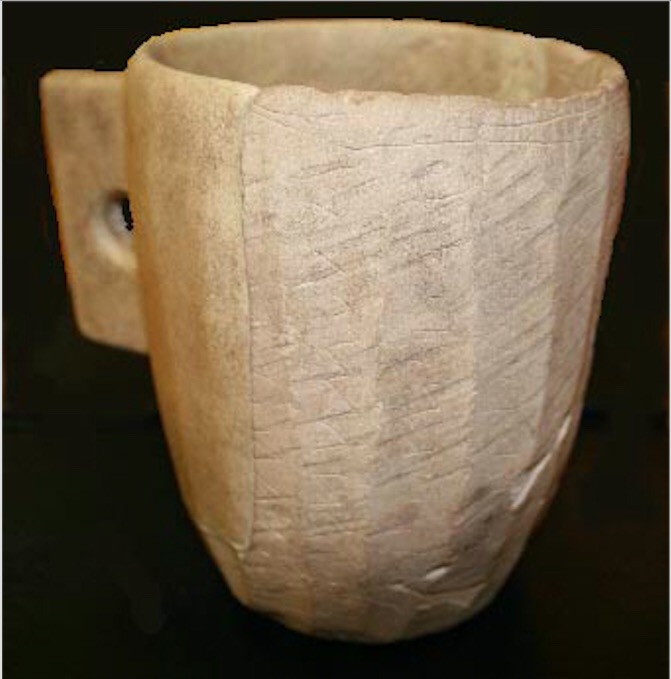
But you can get an example of the amazing discoveries being made here by going to the dig website. One of the most significant discoveries is the stone cup pictured above. It was found in 2009, broken, but with visible writing on the fragments. Professional restorers put the cup back together and the writing was analyzed. It turned out to be “inscribed with 10 lines of ancient cryptic Hebraic script – known from the Dead Sea Scrolls.”

This was a cup likely used by priests for ritual cleansing of their hands. The cryptic inscription connects the vessel to the other location know to use similar writing — the Qumran community that preserved the Dead Sea Scrolls. 

Experts are still trying to decipher the cryptic text. But to find a material connection between the Jerusalem priests and the Essenes in Qumran is amazing. 

No doubt there have been and will be more amazing discoveries that will shed light on our understanding of the ancient world.

I wish I could share them with you. Later…

Children of the Light and Children of the Darkness


Throughout human history we humans have been predisposed to divide people into two groups — insiders and outsiders, us and them, children of the light and children of the darkness. That was certainly the case for the Essenes — the first century Jewish sect that separated from the Temple in Jerusalem, set up an aesthetic community on the Dead Sea, and copied and preserved what we know as the Dead Sea Scrolls. 

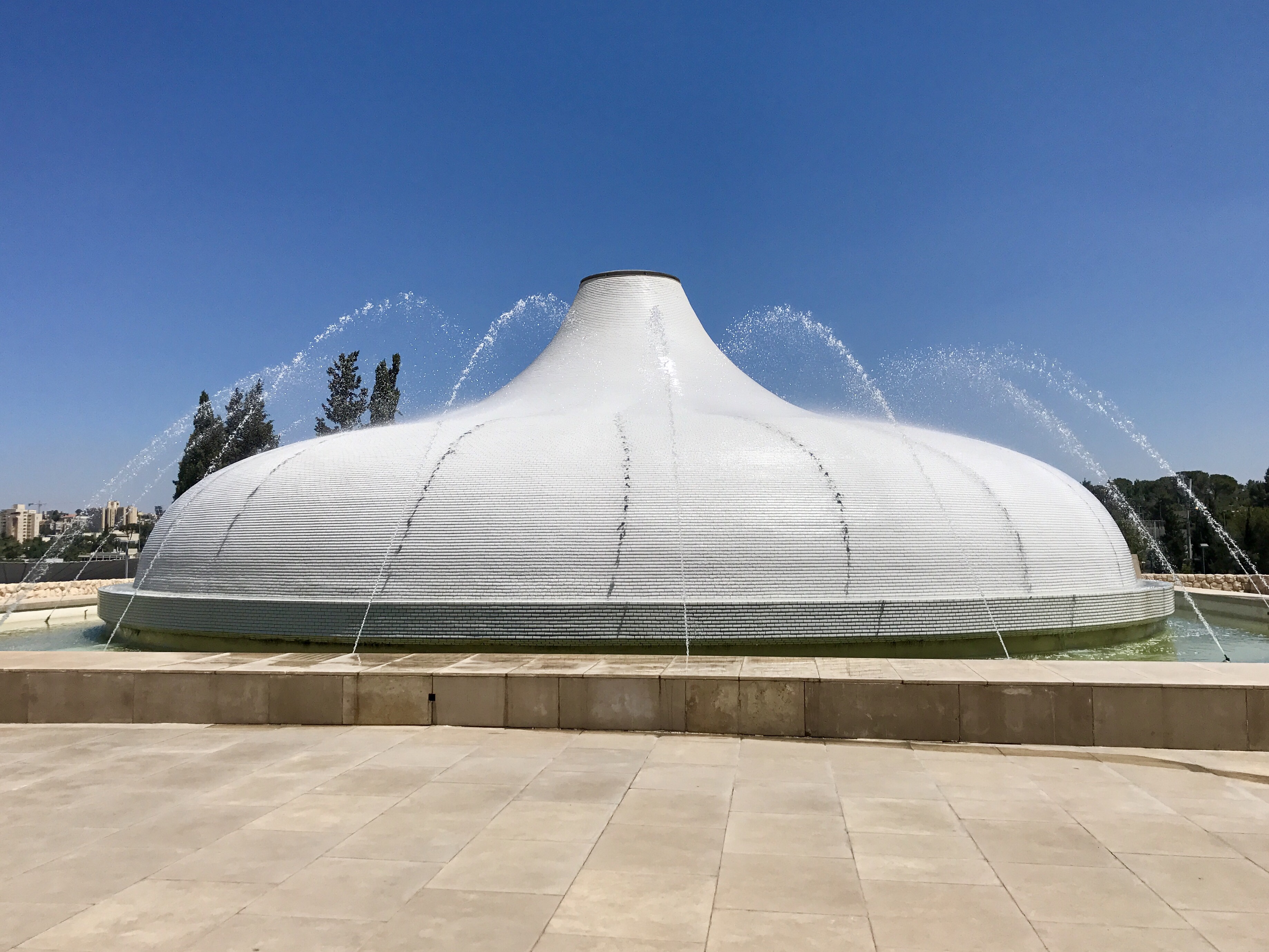
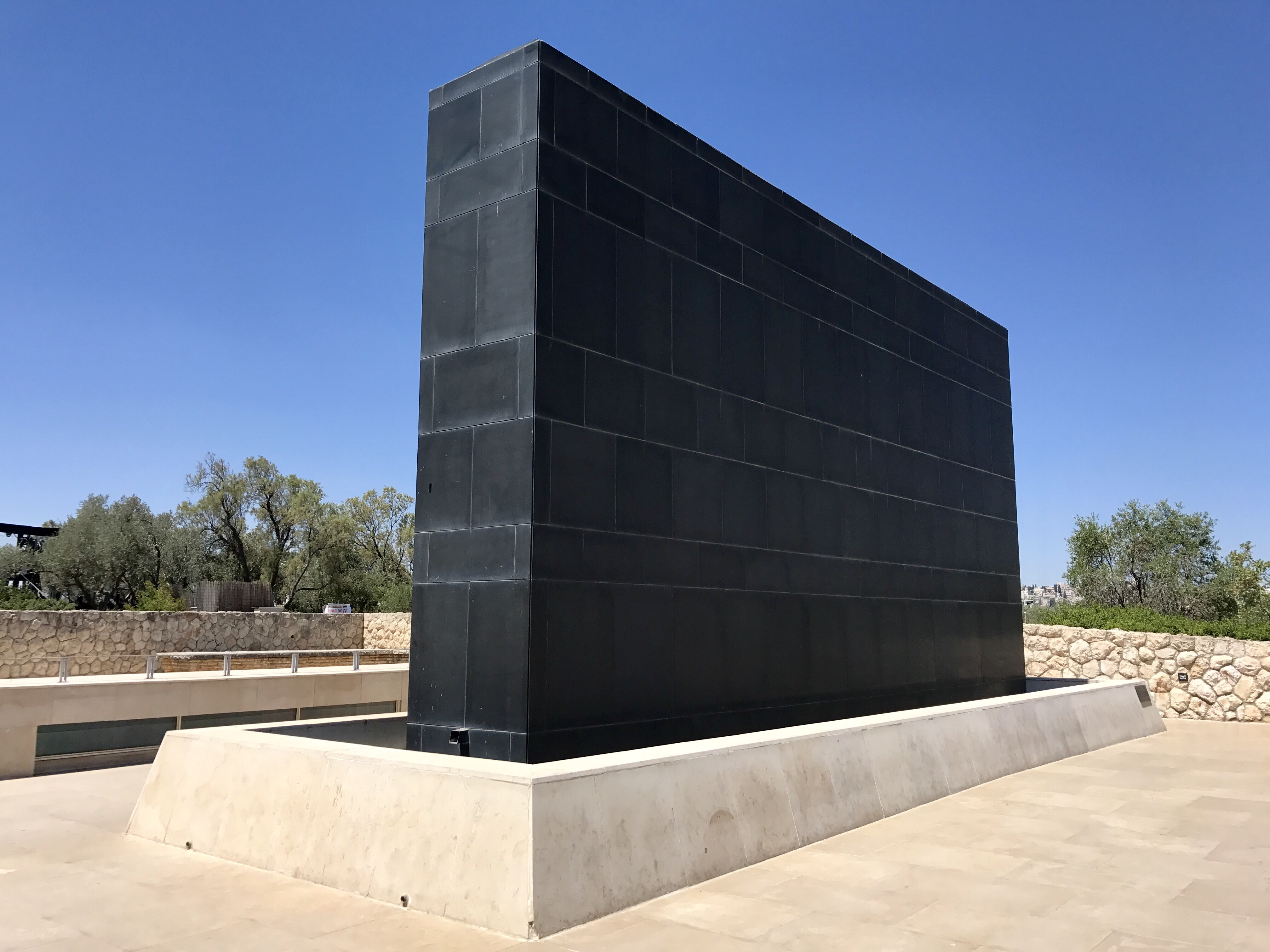
At the Israel Museum, the Shrine of the Book exhibit displays fragments of the Dead Sea Scrolls. They are housed in a structure made to resemble one of the scroll jars in which the scrolls were found. The top of this architectural facsimile, pictured above, is white — representing the Children of the Light (the Essenes). Just a few metres away is a black monolith, also pictured above, that represents the Children of Darkness (the compromised Temple leadership and many others). White vs. Black. Good vs. Evil.

Some good things came out of the Essenes’ separation from earlier tradition — the Dead Sea Scrolls, for one. But with religious fervor, they also perpetuated the division of people into two kinds of people — good and bad. Acceptable and rejected.

Maybe we are right to divide humans into two groups. Maybe not. Perhaps the very best division is between those who divide people into groups and those who do not.

Jerusalem streets


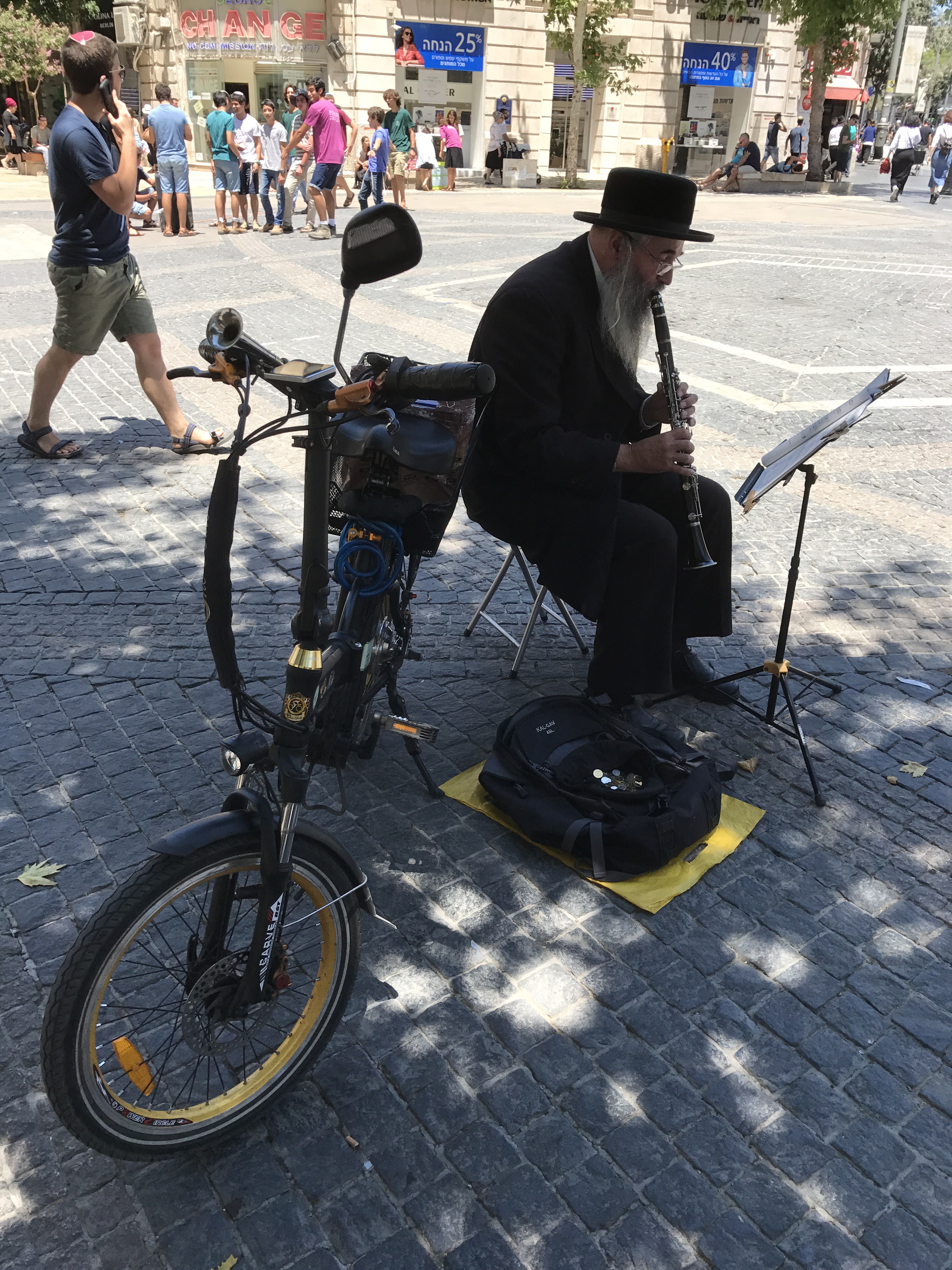
The Old City, near where the dig is being conducted, is only one part of the larger city of Jerusalem. Jerusalem is a large diverse, multicultural, Middle-Eastern city. A light rail line travels along the nearby Jaffa Street where shops, cafes, ATMs, and street performers make for a great Friday morning stroll.
Pictured here is an older Hasidic Jew playing the clarinet (quite well, actually) to the delight of listeners. His instrument case was open in front to receive the donations of his audience. 

On our morning stroll we also saw a group of young men performing a novelty dance and a group of mostly female demonstrators protesting the many youth killed this year in Israel.

Just a normal morning on the streets of Jerusalem — probably not so different (except for the ATMs) from the streets of Jerusalem in Jesus’ day.

Team Effort

The first week is done. The visual look of the site is changing as walls come down, dirt and stone removed, and a little more knowledge is gained. One half of the first session is completed.

We wrap up on Thursdays since the Muslim Friday prayers (Salat: where the community gatheres for prayers, like on our Sunday mornings) are held at midday on Friday and the Jewish Sabbath starts Friday at sundown. So, Friday and Saturday are our weekend. 

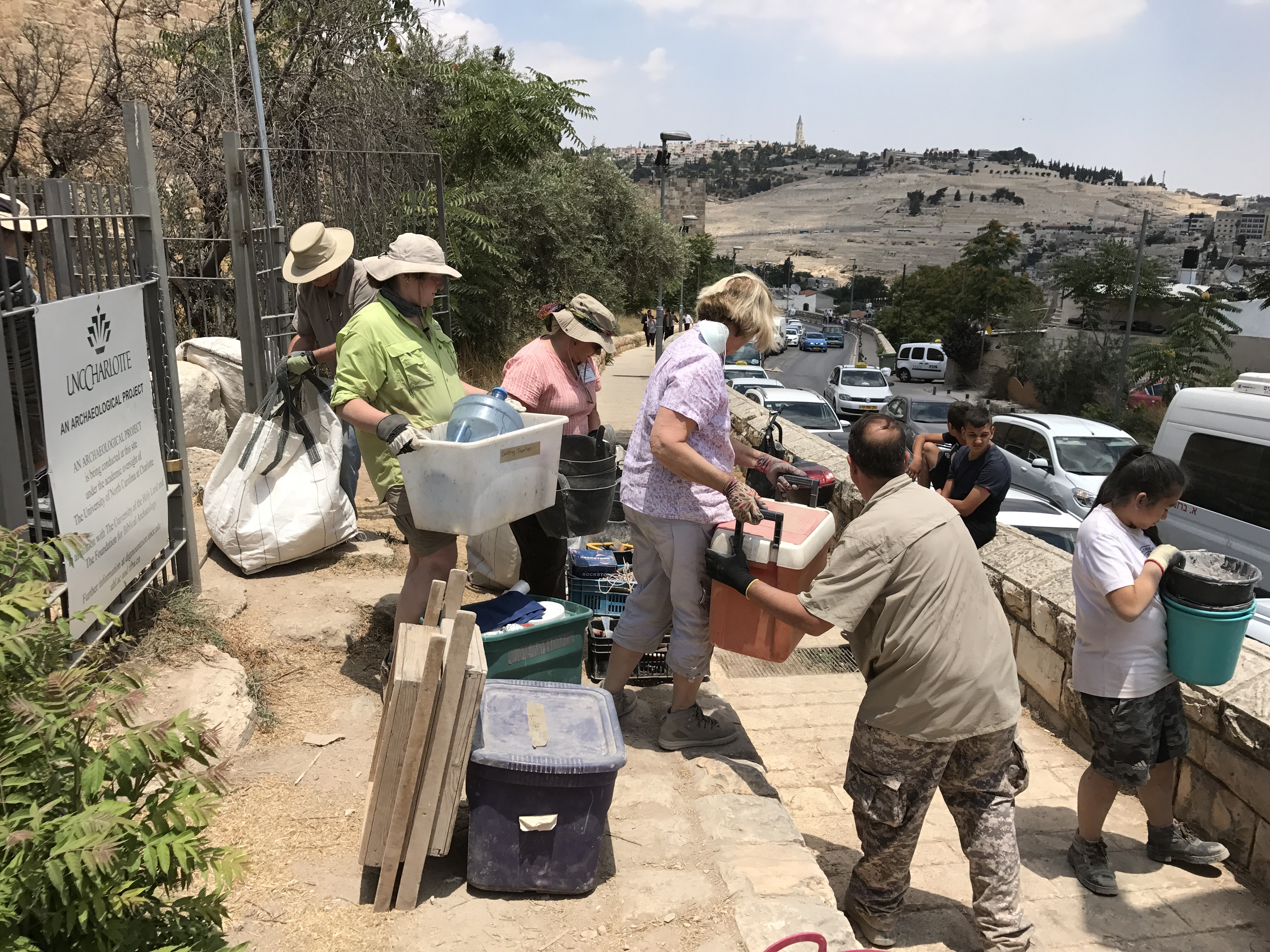
All the work accomplished so far could not have been done without a lot of team work. Early in the morning a long line of team members line up to pass equipment from the storage area to the site. At the end of the day a reverse assembly line (pictured above) puts it all back. 

When you are working side by side, a bond grows that makes you more than just random people thrown together on a project. Teamwork happens. You start to call each other by name and share personal backgrounds. You help each other and a team is formed.

The team worked hard this week. Now, for some rest until Sunday morning when we do it all again.

Archeological finds

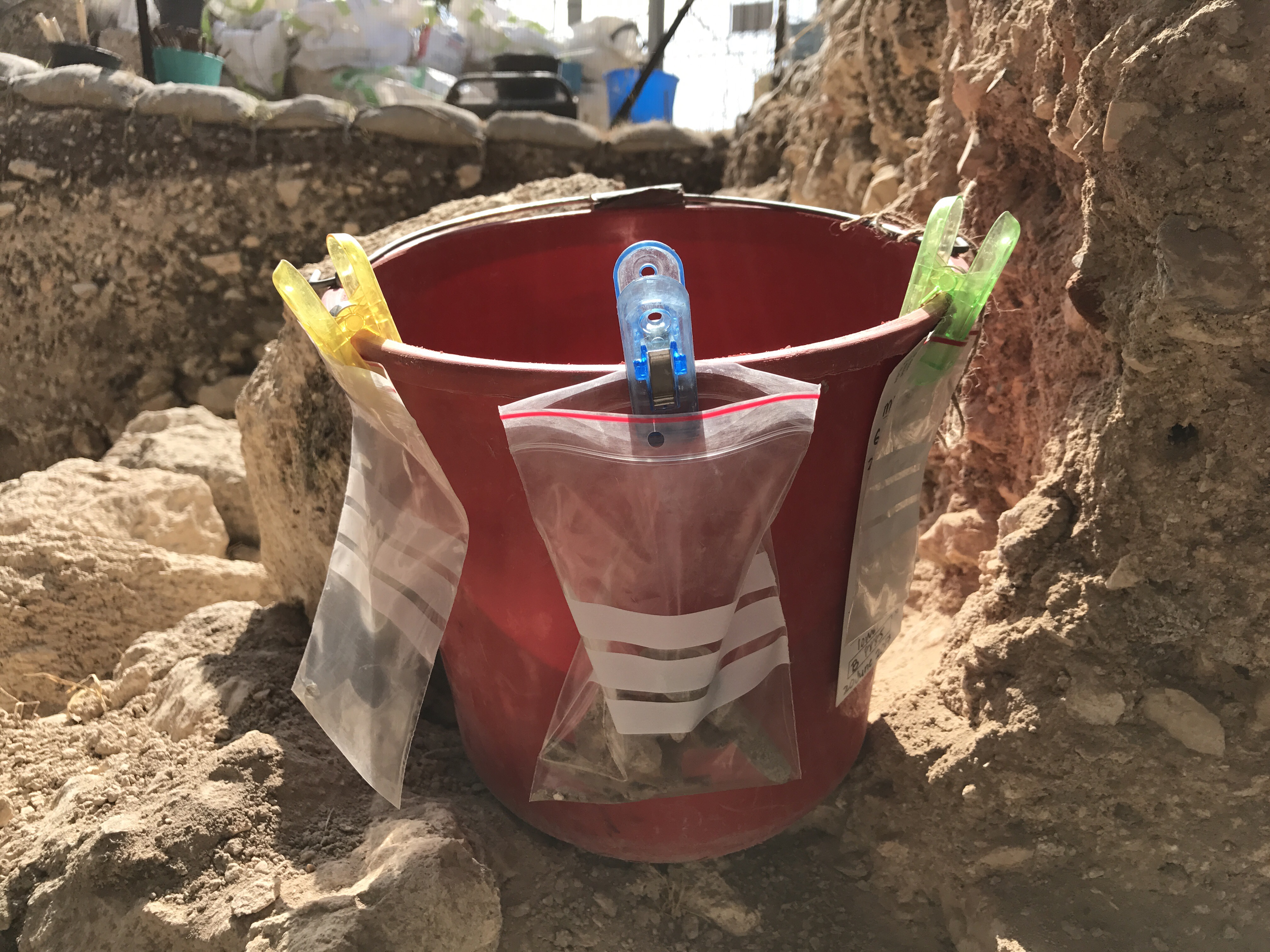
They go in a “find” bucket or a plastic bag — those things the archeologists want to and often find. They are called by the genetic word find. They could be shards of pottery, remnants of shells, prices of metal or pieces of charcoal. Their presence tells us a lot about life back then.

Some finds, like pottery shards, are placed directly in the bucket. Others are presorted into plastic bags.

Every bucket is catalogued with a reference system that can tell future researches the exact location the item was found.

Sophisticated surveying equipment, including precision laser sensors, can precisely locate a particular find or carefully map out a specific area (loci), to help archeologist recreate a 3-D virtual representation of the site. Sometimes where an item is found is just as important as what was found. 

Finding something, as exciting as it is, is only the first step in a long, involved process to determine a find’s significance and value.  

Many finds today. Many more to come! 

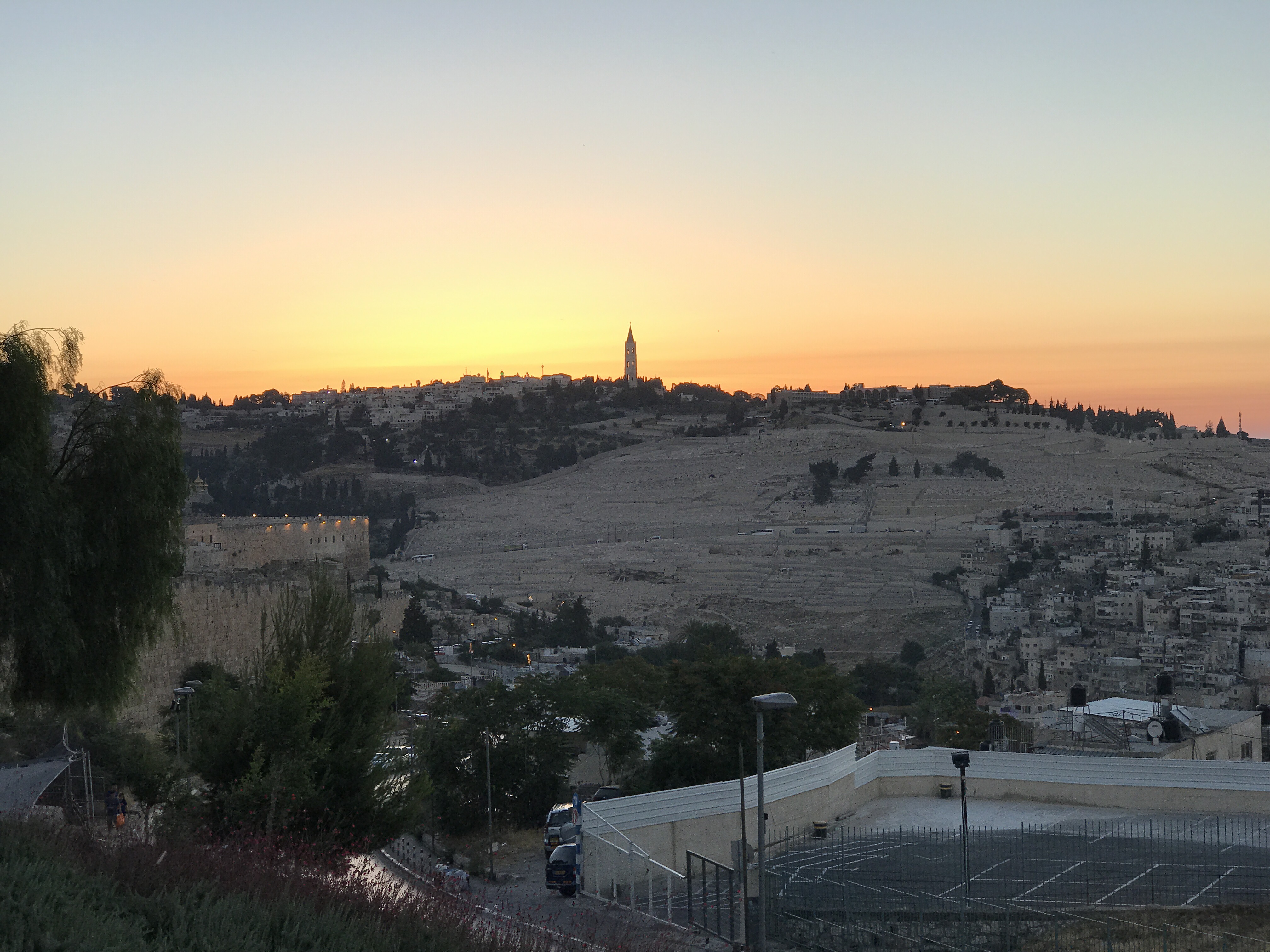
The Mt. of Olives in the Morning

Use your imagination and edit out all the buildings and infrastructure, cover the mount with olive trees, and this is the view greeting pilgrims each morning, pilgrims like Jesus, who visited ancient Jerusalem.

It’s the view that greets us each morning — one of the things that makes the early morning start worthwhile. 

As we make our way from the hotel through narrow streets and past closed shops, we catch the scent of jasmine and hear the roosters announcing the morning with their signature call — understandable in any language. Now, reading about the cock crowing on the morning of Peter’s arrest has a vivid reference.

Today we began the work of further excavating the site. Walls were removed, boulders hauled up and out, and buckets of dirt disposed of. Layer by layer the past is uncovered. People broke up the ground, looking for “finds.” Surveyors measured. Staff directed teams. And all things of note (more on this later) were catalogued.

After a beautiful start to the day, Dig Mt. Zion 2017 is underway!

Cleaning the dirt

Up at 4:15am to be at the site by 5:30. (Why? to get a full day’s work in before it gets too hot.)

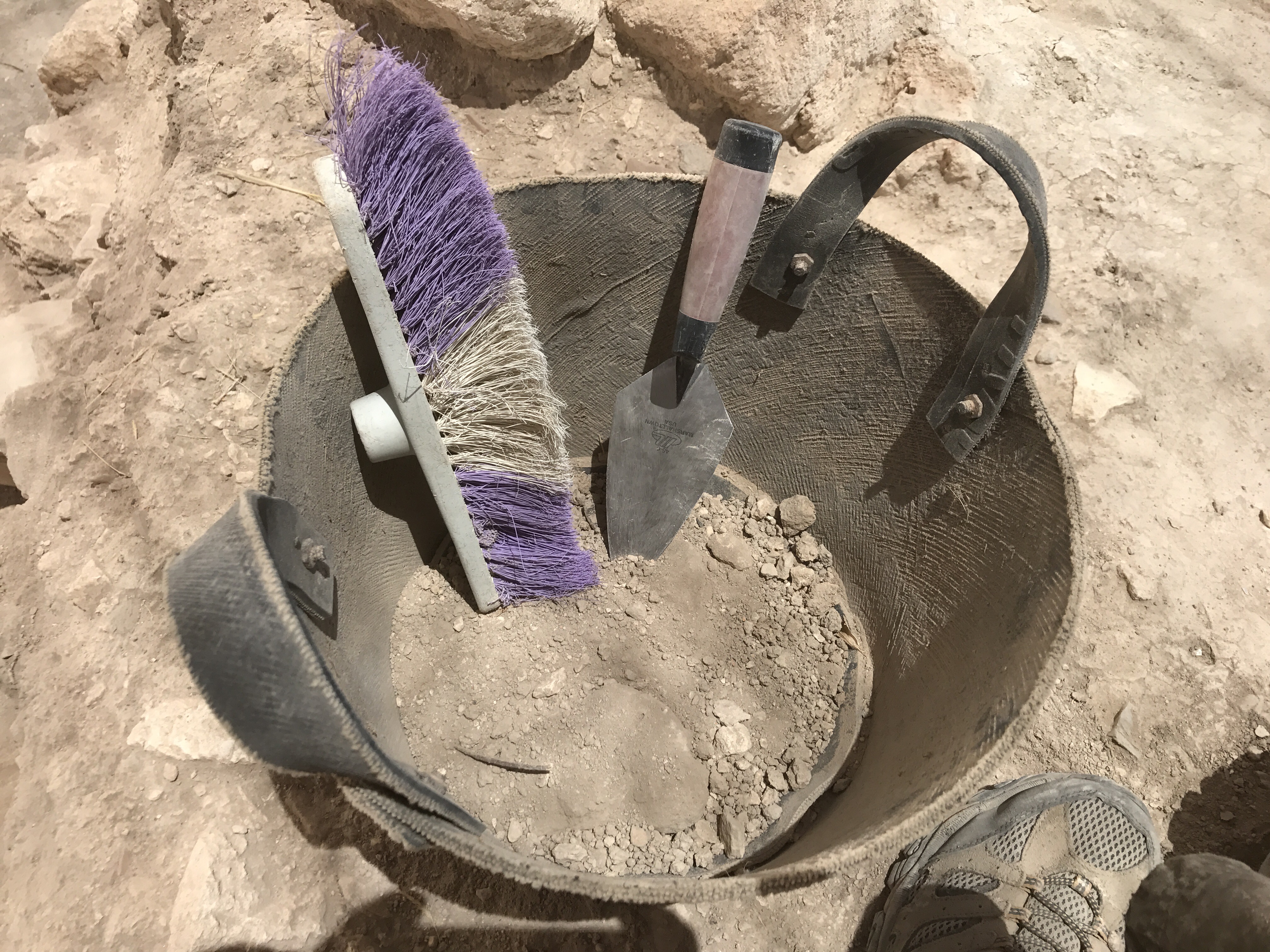
On our first day at the dig, after hearing about the history and archaeological context of our site, we hauled tools from their storage nearby and were divided into teams.  The startup task was to clean the site — getting rid of grass and vegetation that had grown up since last summer, and giving it a thorough cleaning. Yeah, clean the dirt!

Over 60 people, college-aged students through older adults, took brushes and towels and rubber buckets (pictured) and gently removed a year’s worth of accumulated dust and dirt so that photos could be taken and features made visible. 

With this many workers, by our wrap up time of 12:30pm, the site was judged to be (mostly) in tip-top shape. 

So we cleaned some dirt today. 

Tired, exhausted, but satisfied with a good day’s labor, we trudged back to the hotel, to crash, clean up, refuel and rehydrate. 

Tomorrow begins bright and early.